Thanks to the rise of voice assistants such as Alexa, Siri and Google, voice search is becoming an increasingly popular way to find out information. You might be wondering how this affects your website and how to rank for voice searches – we can help with that.
We’ll run you through how to optimise your website for voice search with our eight top tips.
But first, let’s look into what voice search is and how voice search affects SEO.
What Is Voice Search?
Have you ever been driving and realised you need to make a call? So you say: “Hi Siri, call mum.” Or maybe you need to write a shopping list but have no paper? So you say: “Alexa, start a shopping list.” Well, that’s voice search!
In short, voice search is a technology which allows you to search the web or an app instead of typing. It works by using voice recognition technology to convert spoken words into text. This text is then converted into a keyword which the search engine or app can use to provide you with the most relevant information.
That’s a brief look into the question: ‘What is voice search?’ But what’s most important to understand is that most search engines, mobile phones and apps have some form of voice search feature. It’s a great hands-free option and is favoured over typing for its convenience and quick results – speaking is a lot easier than typing sometimes. Whether you’re using a voice assistant or searching the web with your voice, it’s hard to deny that voice search is becoming a big part of our everyday lives.
How Many People Use Voice Search?
In 2024, nearly 20.5% of the worldwide population used voice search, with around 8.4 billion voice assistants expected to be in use. With the general world population being around 8.2 billion people, it goes to show that voice search is really taking off.
So: How many people use voice search? A lot of people! Which means there’s a lot more interesting data to look at.
In the US, the top five voice searches were for weather (75%), music (71%), news (64%), entertainment (62%) and retail (54%) – which makes a lot of sense. Think about the times you’ve quickly asked a search engine or web assistant: “What’s the weather like today?” Or: “What films has (x) actor been in?” These aren’t deep, philosophical questions that need a lot of research time; the user wants a quick and easy answer, and voice search is the best way to go for time efficiency.

How is Voice Search Changing SEO?
That’s why it’s so important that businesses start optimising their website for voice search. As we can see, voice search isn’t going away any time soon; businesses need to embrace this new type of searching and optimise their website and content to ensure they continue to rank on search engines.
To answer the question: ‘How is voice search changing SEO?’, we need to focus on language and keywords.
The main way voice search is changing SEO is by changing the types of keywords we use and the way we use them in copy. As we’ve discovered, voice search is used for convenience and user-friendliness; voice search is conversational and casual, which means the copy used on websites and in content needs to follow suit. But this is a great change as it will make content and information more accessible to the average internet user while still competing and ranking for those top spots.
How to Optimise Your Website for Voice Search
Now that we know what voice search is, why people use it and why it’s important for SEO, here are our eight top tips on how to optimise your website for voice search.
1. Conversational Language
One of the main reasons why voice search is so popular is that it’s a lot easier to say what you mean in a casual way without needing to worry about the formalities of typing. Therefore, the copy on your website would benefit from skipping out on the jargon and niche industry terminology.
2. Long-tail Keywords
That leads us onto keywords – the longer, the better! The average voice search result is 29 words long; so, long-tail keywords are essential to include within your copy. Similarly, when using a conversational tone, utilising long-tail keywords helps to mimic natural speech and work better as a sentence or question.
3. Concise Answers
While we’re on the topic of copy, your answers need to be concise and direct; filler words and phrases aren’t necessary for voice searches, as the user is often looking for a quick and simple answer to their query.
4. Local SEO
Let’s move on to some more technical SEO changes you can make to your website. Research has found that local searches make up 76% of voice searches; therefore, optimising your local intent will help in being found through voice search. If you need more support with local SEO, read more about how to market your business locally in our post.
5. Page Speed
Page speed has always been an important factor to consider when trying to improve and optimise your website. But did you know that voice searches load 52% faster on average? Users don’t want to wait for your page to load to find the answer, and search engines won’t recommend you as a result. So, make sure to compress your images and videos and remove any glitches, and your website will be ready to be found by voice search.

6. Accessibility
Another reason why people love voice search is because it’s so accessible and easy to use; so why would a user then want to go to a website that isn’t mobile-friendly? 27% of voice searches happen on mobile devices, so while you’re optimising your page speed, make sure your website is also mobile-friendly. And if you need more guidance on how to improve user experience on your website, you can find out more in our blog on user experience.
Think you might need help with some of these optimisations? Reach out to us to hear about our services or get a free website audit.
7. Schema Markup
Adding schema markups to your website and content is a great way to help search engines understand what your content is and the meaning behind it. It’s essentially adding code to the backend of your website to help represent certain pieces of information. Doing this will allow search engines to more easily pull the information it needs to answer the user’s question, which also works for voice searches.
8. Featured Snippets
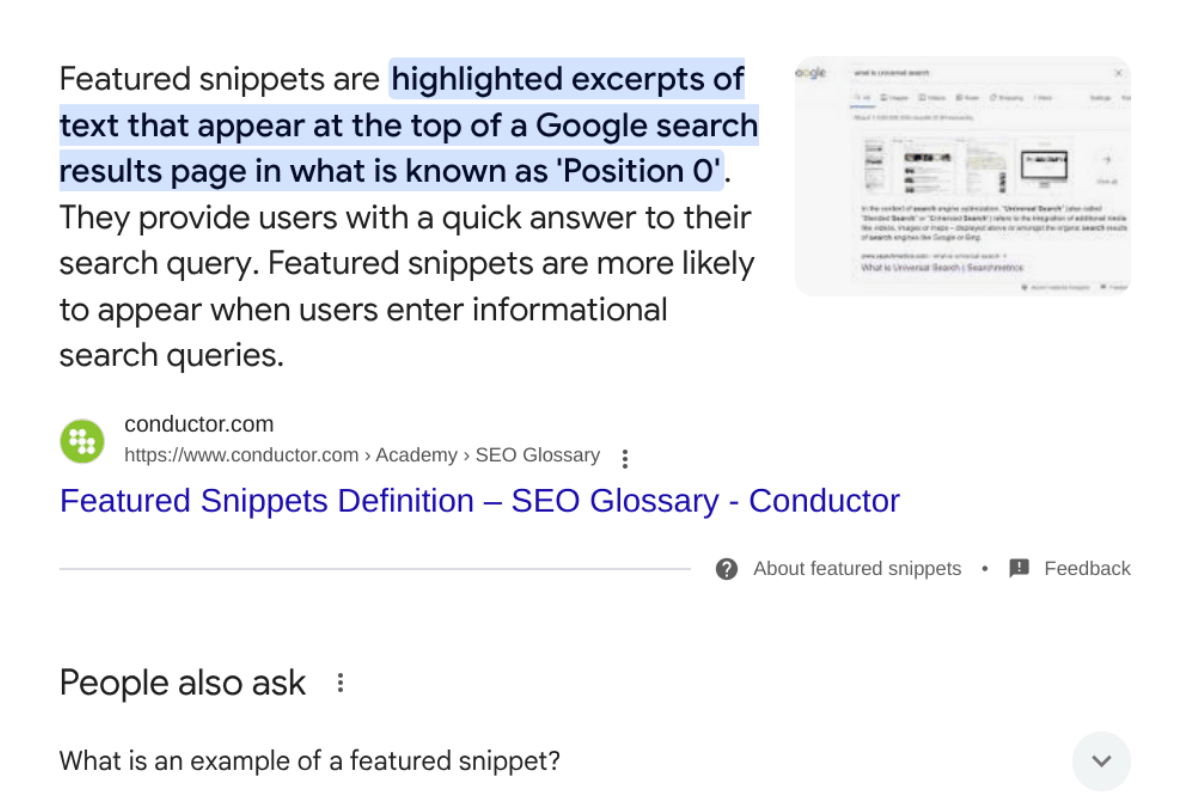
This will also help with getting a featured snippet. This handy search engine feature is often used to form an answer to a voice search. So, make sure to structure and format your content to target featured snippets.
There you have it, that’s how to optimise your website for voice search. To summarise, your website and content need to be conversational in tone to mimic natural speech, as well as being mobile-friendly and accessible, taking into account your end user and their intent.
How We Can Help
If you need support with optimising your website and figuring out how to rank for voice searches, this blog should give you a good starting point and general understanding of voice search SEO.
If you’re not used to SEO, this may seem a bit daunting, but don’t worry, we can help you. We have years of experience helping businesses rank on search engines, ensuring their website is optimised for the best search results.
Need further convincing? Our case studies page highlights our experience and knowledge.
Contact us today to see what we can do for you.